The information on this website is general in nature and does not take into account your objectives, financial situation, or needs. Consider seeking personal advice from a licensed adviser before acting on any information.
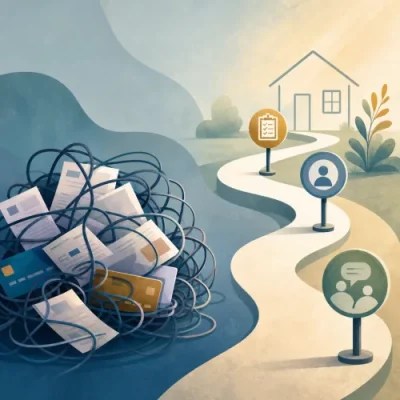
If debt repayments are becoming difficult, there are practical steps Australians can consider, including reviewing cash flow, prioritising urgent debts, contacting providers early and seeking free financial counselling.
Debt pressure can build quickly when income drops, expenses rise or several repayments fall due at once. If you are experiencing payment difficulty, the most important step is to act early rather than wait for missed payments, default notices or escalating fees.
This guide explains common financial hardship options Australians can consider, how to think about debt repayment strategies, and where free support may be available. It is general information only and does not take your personal circumstances into account.
Start by getting a clear picture of your debts
Before deciding what to do, make a simple list of what you owe. This can reduce uncertainty and help you identify which payments need urgent attention.
For each debt or bill, note:
- the provider or creditor;
- the current balance, if known;
- the repayment amount and due date;
- whether the debt is secured against an asset, such as a home or car;
- the interest rate, fees or late payment charges, if available;
- whether you have already missed payments; and
- any letters, emails or notices you have received.
If the list feels overwhelming, start with what is due in the next two weeks. You can then work backwards through other accounts.
If you need help building a broader spending plan, MoneyTips also has a practical guide to creating a monthly budget that works for you.
Prioritise essential and high-risk payments
Not all debts carry the same immediate consequences. A useful debt management approach in Australia is to separate urgent payments from less urgent ones.
Priority debts and essential bills may include:
- rent or mortgage payments;
- electricity, gas, water and phone bills;
- car loan repayments if the vehicle is essential for work or family needs;
- council rates or strata payments;
- tax debts or government-related debts;
- court fines or legal payment obligations; and
- insurance premiums for cover you still need.
Unsecured debts, such as credit cards, personal loans and buy now, pay later accounts, are still important. However, the immediate consequences may differ from missing rent, mortgage or utility payments. If you cannot pay everything, consider speaking with a free financial counsellor before deciding which payments to pause or reduce.
Contact lenders, utilities and service providers early
Many banks, lenders, utilities, telcos, insurers and other providers have hardship teams or payment assistance processes. You do not always need to be in default before asking for help.
Depending on the provider, your circumstances and the type of account, hardship options may include:
- a short-term payment pause;
- temporarily reduced repayments;
- an extension of time to pay;
- a repayment plan for arrears;
- fee waivers or fee holds in some circumstances;
- changing the repayment date to match your income cycle; or
- reviewing whether a different product structure may be available.
These options are not guaranteed. Providers assess requests based on their own criteria, the type of debt, your situation and any applicable laws or industry codes.
What to say when asking for hardship assistance
You do not need to provide every personal detail in your first call or message. A clear explanation is usually enough to begin the conversation.
You might explain:
- what has changed, such as reduced hours, illness, separation or increased living costs;
- what you can realistically afford right now;
- whether the issue is temporary or ongoing;
- when you expect your situation to improve, if known; and
- whether you are receiving help from a financial counsellor.
Keep notes of the date, the person you spoke with and what was agreed. If an arrangement is made, ask for the details in writing.
Debt repayment strategies Australians commonly consider
Once essential expenses are covered, you may be able to choose a structured repayment strategy. The right approach depends on your income, interest rates, minimum repayments, arrears, fees and how confident you feel managing multiple accounts.
| Strategy | How it works | Key considerations |
|---|
| Minimum repayments while stabilising | You pay the minimum required amounts while you rebuild cash flow. | This may help avoid missed payments, but interest can continue to add up and debts may take longer to reduce. |
| High-interest first | You direct extra money to the debt charging the highest interest while maintaining minimums on others. | This can reduce interest costs over time, but it requires discipline and stable minimum repayments. |
| Smallest balance first | You focus on clearing the smallest debt first while maintaining other payments. | This can build momentum, although it may not minimise interest compared with targeting higher-rate debts first. |
| Negotiated repayment plans | You agree on adjusted repayments with creditors or providers. | Terms vary. Make sure the repayment amount is affordable before agreeing. |
| Debt consolidation | You combine multiple debts into one loan or facility. | This may simplify repayments for some people, but fees, interest, loan term and eligibility can affect the outcome. |
Be cautious about using new credit to cover old repayments unless you understand the full cost and can afford the new arrangement. Extending a loan term may reduce monthly repayments but can increase total interest paid over time.
Understand the impact of missed payments and defaults
Missing repayments can have consequences. These may include late fees, interest charges, collection activity, service restrictions, arrears, default listings or legal action, depending on the type of debt and provider process.
Credit reporting outcomes depend on the provider, the type of account, timing, your repayment history and applicable credit reporting rules. If you are worried about your credit file, ask the provider how a proposed hardship arrangement may be recorded and consider getting independent guidance.
It is usually better to communicate early than to ignore calls, emails or letters. If a creditor cannot contact you, they may continue with their standard collections process.
When debt consolidation may help - and when it may not
Debt consolidation is sometimes promoted as a simple fix, but it is not suitable for everyone. It generally involves taking out one new loan or facility to pay out several existing debts.
Potential benefits may include:
- one regular repayment instead of several;
- a clearer repayment schedule;
- less administration; and
- the possibility of a different interest rate or fee structure, depending on eligibility and provider criteria.
Risks may include:
- paying more interest over a longer term;
- fees for the new loan or for closing existing accounts;
- using cleared credit cards again and ending up with more debt;
- securing unsecured debt against an asset, such as a home; and
- being declined if the lender assesses the new loan as unaffordable.
Before consolidating, compare the total cost, not just the monthly repayment. Consider whether the underlying cause of the debt has been addressed, such as spending pressure, income instability or emergency expenses.
Free financial counselling and support options
Financial counsellors provide free, independent and confidential support to people experiencing money stress. They can help you understand your options, prepare a budget, communicate with creditors and consider hardship arrangements. They do not lend money or sell financial products.
Free financial counselling may be available through community organisations, phone-based services and some specialist support services. This can be especially helpful if you are dealing with multiple debts, legal notices, family violence, illness, unemployment or pressure from debt collectors.
If your financial stress is affecting your wellbeing, it may also help to read about financial anxiety and why it happens. Money stress is common, and getting support early can make decisions feel more manageable.
Be careful with quick fixes and high-pressure offers
When you are under pressure, fast solutions can be tempting. Take extra care with services or products that promise to wipe debts quickly, repair credit files instantly or guarantee approval for new credit.
Warning signs may include:
- large upfront fees before any work is done;
- promises that sound too certain;
- pressure to sign immediately;
- suggestions to ignore creditors without a clear plan;
- unclear fees or contract terms; and
- new loans that appear unaffordable based on your income and expenses.
Some formal debt solutions can have serious long-term consequences for your credit file, assets, employment options or ability to borrow. If you are considering a debt agreement, bankruptcy or another formal insolvency pathway, seek independent advice before proceeding.
Build a realistic hardship action plan
A simple plan can help you move from panic to action. You do not need to solve everything in one day.
- List your urgent expenses. Start with housing, food, utilities, transport and essential insurance.
- List debts by risk and cost. Note which are secured, overdue or charging high interest.
- Work out what you can afford. Use your current income and necessary expenses, not an optimistic future budget.
- Contact priority providers first. Ask about hardship arrangements before the next payment is missed, if possible.
- Get agreements in writing. Keep copies of repayment plans and hardship approvals.
- Avoid taking on new debt without checking affordability. A new loan may add pressure if your income has not stabilised.
- Seek free help if the situation is complex. A financial counsellor can help you understand options and communicate with creditors.
You can also use MoneyTips for general financial information, articles and tools designed for everyday Australians.
What to do if you cannot afford any repayments
If you cannot afford minimum repayments after paying for essentials, do not assume there is no option. Contact providers, explain your situation and ask what hardship support is available. If you have multiple creditors or feel unsure what to say, contact a free financial counsellor as soon as possible.
It may help to prepare a short summary of your income, essential expenses and debts before speaking with anyone. If you have received default notices, legal letters or repossession warnings, treat these as urgent and get independent help promptly.
Managing debt is a process, not a single decision
Debt management in Australia often involves a combination of budgeting, prioritisation, negotiation and support. There may not be a perfect option, but acting early can give you more room to make informed choices.
If you are experiencing financial hardship, focus first on essentials, communicate with providers, avoid high-pressure quick fixes and seek free independent support where needed. Your options will depend on your individual circumstances, the type of debt and each provider's criteria.
Published: Saturday, 22nd Aug 2026
Author: Paige Estritori



No comments yet. Be the first to share your thoughts.